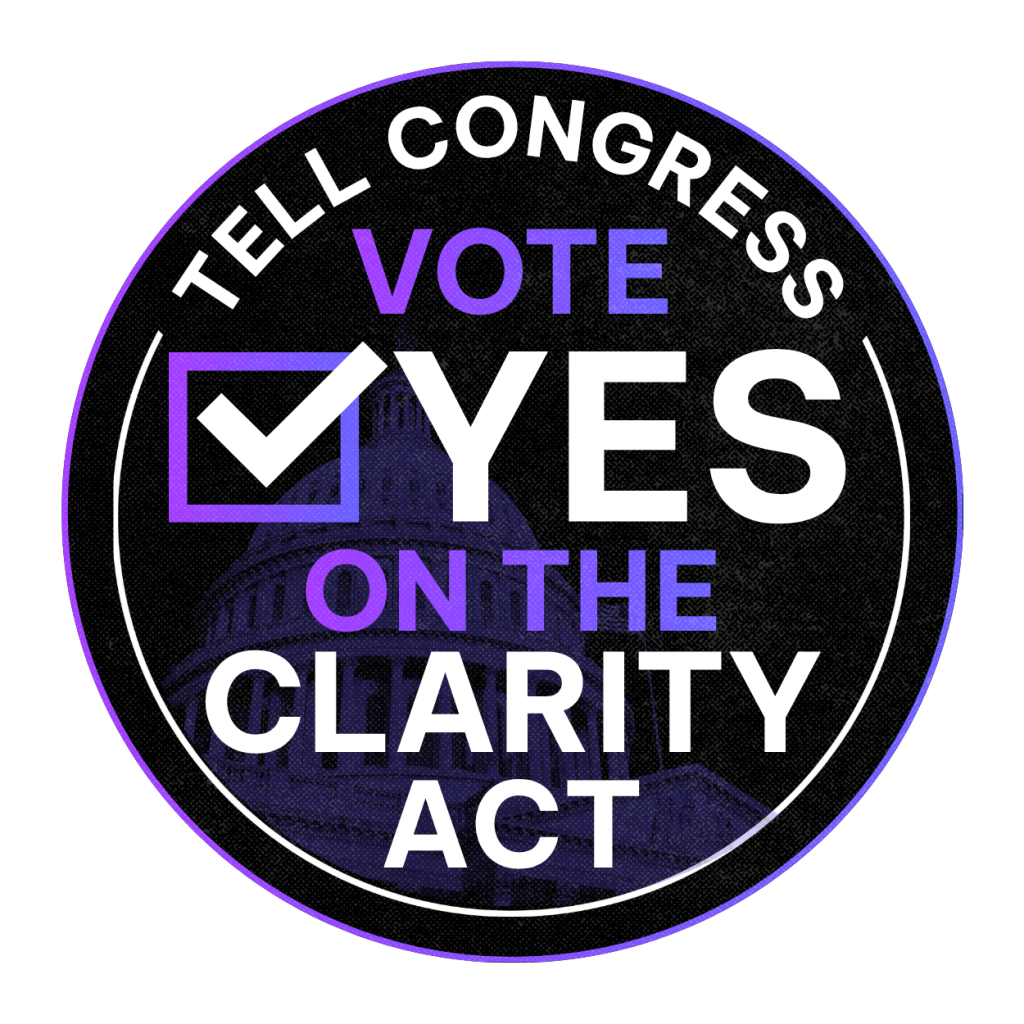
Well, it was a week where we expected market structure text that never came, but the text is fast approaching as I write this on Monday! As a reminder, we cannot hold back now. Please, I implore all of my 1,253 subscribers (including my mom and her friends. Hi mom/Paula!) to this blog to change your profile picture across platforms to support passage of the Clarity Act. Call your Senators. Get loud. This is the best and possibly last chance to pass market structure legislation for the foreseeable future so if we want the exchanges, financial services providers, and builders who are waiting on Clarity to offer blockchain-enabled products and services to U.S. residents, now is the time to make that known.
Here’s everything that happened last week in crypto law:
CFTC Rule Change Stay re: Michigan Order
A few months ago, the Michigan State AG sued Kalshi over its sports event contracts, and attempts to move the litigation to federal court failed. The case was remanded back to state court, and a Michigan judge entered a temporary restraining order for Kalshi to void executed trades by Michigan residents. Kalshi tried to comply through their emergency powers pursuant to their federal license. The CFTC has now rejected Kalshi’s emergency rule change request which is needed for Kalshi to abide by the Michigan court’s ruling involving Michigan residents. Kalshi’s Head of Enforcement noted that Kalshi already abided by the Michigan Court’s ruling before the CFTC’s stay came down, noting “We are being put in an impossible position, looking to follow state court orders that may contradict our federal regulatory obligations.”
Tl;dr– Kalshi is put into a tough spot here, and I do feel for them. But the CFTC made the correct call here. The CFTC doesn’t have to, and indeed shouldn’t, act on the basis of a state circuit court judge who has no jurisdiction to tell the federal agency what to do. The only reason Kalshi was put in this position was because state gambling regulators aren’t bringing Administrative Procedure Act (“APA”) challenges to what the CFTC has permitted to be listed on CFTC-regulated exchanges because they know they will lose. So states try to backdoor it by going after the exchanges themselves. Hopefully the next time an exchange is faced with such an Order, they seek permission from the CFTC to use their emergency powers instead of doing it on their own authority, so this issue can come to a head.
OTHER STORIES
Transatlantic Task Force Update: It looks like the long-inactive transatlantic task force between the U.S. and U.K. has released their roadmap which unsurprising focuses on stablecoins and tokenized financial products. The UK also adopted some common sense rules regarding how deployment into lending or liquidity pools are treated for tax purposes (no gain or loss simply for deploying but not selling assets) so pretty quick turn around from a country that was previously seen as hostile to crypto by many.
Death of Content Coins: I always thought the attempt by Base to build around rebranding memecoins as “content coins” was dumb. See my post from April 2025 about it. So happy to see Base finally admit it and move on. I do hate this is being blamed on “social” not working vs. what the real issue was which was pushing “content coins” instead of cool things like Rodeo (RIP NFT Instagram) or fan tokens for sports teams and such.
Tokenized Stocks are Here: DTCC started trading on tokenized stocks and Treasuries. This isn’t exactly the permissionless self-custody of tokenized financial products that is the primary benefit of blockchain technologies, but it’s a start.
Japan Embraces Crypto as Finance: The Japanese Parliament enacted amendments to their Financial Instruments and Exchange Act to include crypto as financial instruments, which dramatically lowers their tax treatment. Japan was one of the first to regulate crypto exchanges which is why Japanese citizens were the only ones protected during the FTX collapse, so not surprising to see them moving forward with innovation here.
GENIUS Act 1-Year: The GENIUS Act turned one this past week, which also brought about the rulemaking deadline set in the statute (which passed with some important rules still unfinalized). You can keep track of The Digital Chamber’s rule responses here.
FTX Payouts Continue: The fact that bankrupt exchange FTX is still making creditor payouts all these years later is further proof why we need Clarity. A reminder that the only two entities in the FTX corporate umbrella that were able to immediate pay back users were the CFTC-regulated entity it acquired near the end of its run and the Japanese exchange due to Japan previously passing digital asset spot market exchange regulations.
SBF Stays in Jail: In related news, the Senate passed a unanimous resolution to encourage the President to not pardon FTX’s former leader, Sam Bankman-Fried (“SBF”). Which is great to see. The guy is a scumbag who used customer funds to make a ton of self-serving risky venture bets. He is right where he belongs (jail).
PayPal Acquisition: Buried in the Stripe/PayPal acquisition proposal are details that Block is also in part looking to own the payment giant. It isn’t hard to see that the plan would be to create a combined entity that could compete with visa/Mastercard and the PayPal PYUSD infrastructure is no smart part of that deal.
CONCLUSION
If you have any questions or would like me to write about anything else, let me know on Twitter (X?) or Farcaster. Any typos or errors are intentional to prove I am not AI. As always, I am an attorney, I am not your attorney. For legal advice, you should always consult (and pay for) an attorney.
Outro/Disclaimer: In late 2022, while I was at Polsinelli, I started preparing weekly updates for attorneys at the firm to stay abreast of the latest Web3 legal developments. I now post the weekly updates on my personal blog every Tuesday, where I also provide links to more obscure legal developments and otherwise discuss industry trends and stories. Please note, the views and opinions I express are solely my own. They do not reflect the official stance or endorsement of the Digital Chamber or any of its members.

